
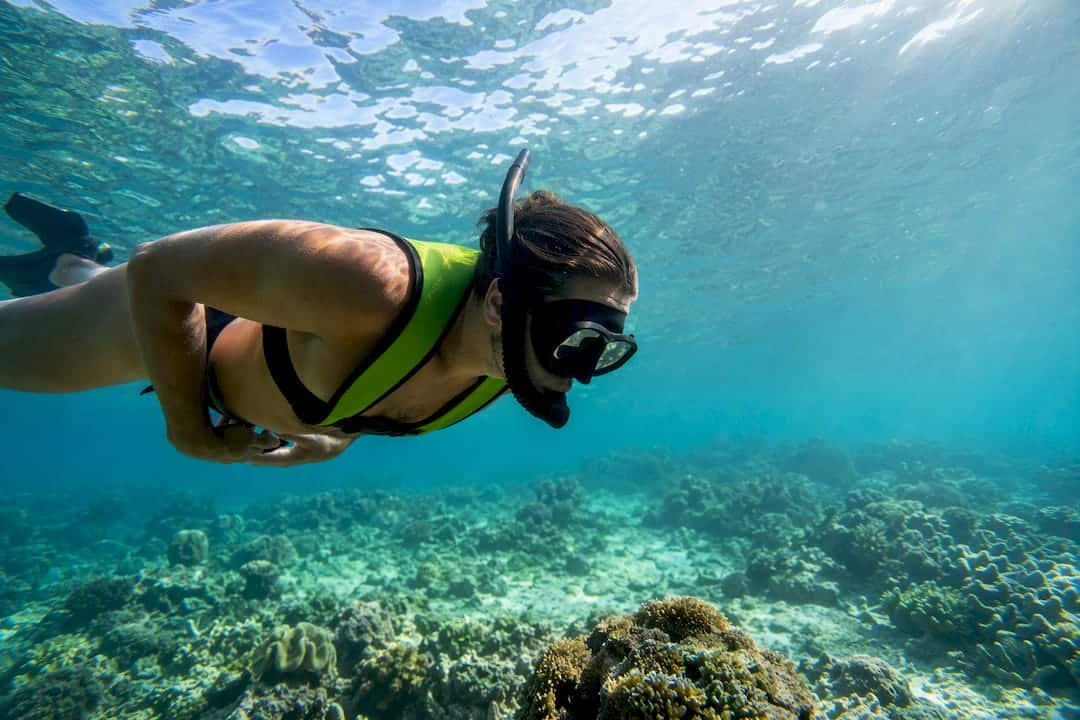
Phuket Snorkel Trips: Why Guides Fit Vests Instead of Life Jackets
For recreational snorkelling, a snorkel vest is usually the better choice. It floats you face-down, adjusts to your comfort, and lets you glide along a reef without fighting your gear. A life jacket earns its place when the priority shifts to face-up rescue, whether that’s rough water, a non-swimmer, or a boating scenario rather than reef-watching. Either device only works if it’s fitted properly and actually worn.
TL;DR:
- A snorkel vest is best for active, face-down floating during reef snorkeling, with adjustable buoyancy for ease of movement and comfort.
- Life jackets are designed to turn unconscious wearers face-up, making them essential for open water, boating, or unsupervised swimming.
- Proper fitting and approval standards are critical; most devices only provide safety benefits if worn correctly and checked before use.
- Inflatable snorkel vests allow for precise buoyancy control, while foam life jackets are fixed and do not adapt to swimmer position.
- Many operators supply and inspect gear to ensure safety, emphasizing the importance of proper fit and user compliance over brand or color choices.
Table of Contents
- Snorkel vest vs lifejacket: the key differences at a glance
- How each device actually creates buoyancy
- Who should use a snorkel vest, and who needs a life jacket?
- How to choose and fit your flotation device
- What the safety standards actually mean for you
- Keeping your gear in working order
- How guides and operators actually manage flotation on the water
- A publisher’s honest take on the snorkel vest vs lifejacket debate
- Book a guided snorkel trip where the gear is sorted for you
- Sources
Snorkel vest vs lifejacket: the key differences at a glance
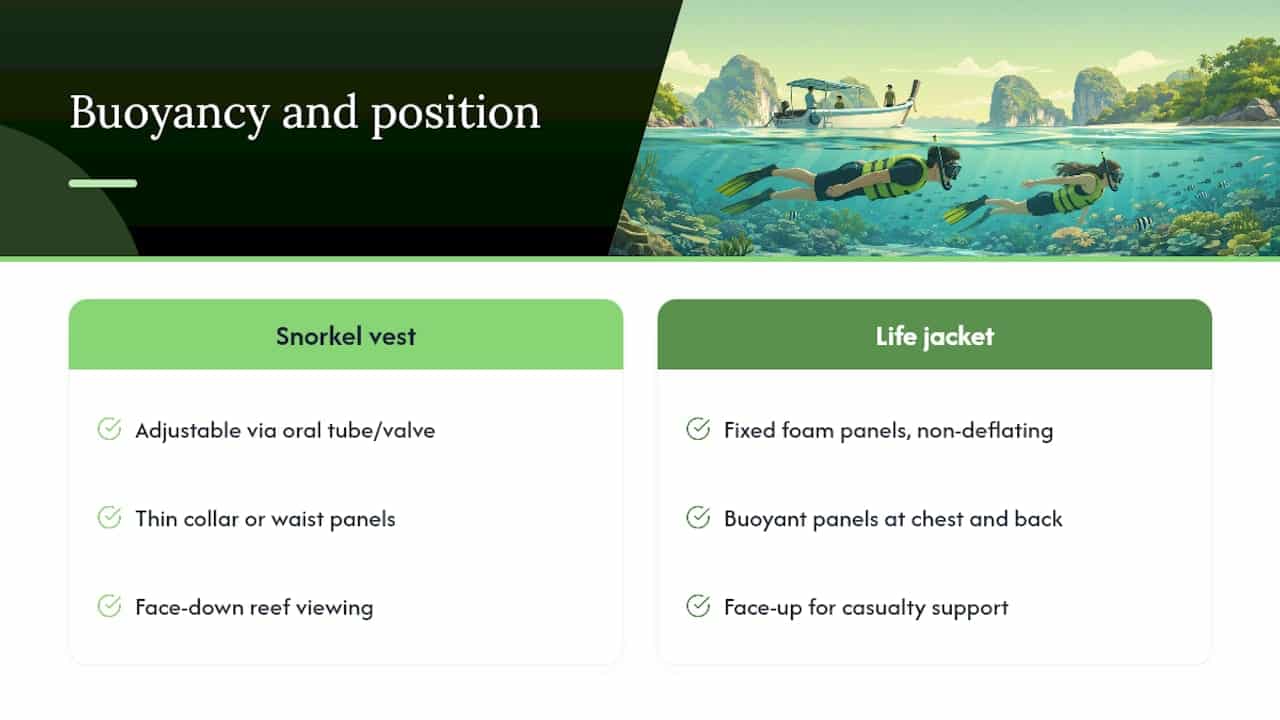
The two devices are built for opposite jobs. A snorkel vest keeps a confident swimmer floating horizontally so they can look down at the reef; a life jacket is built to turn an unconscious person face-up and keep their airway clear. That single design choice explains almost every other difference between them.
- Purpose: snorkel vests support active, face-down swimming; life jackets support passive, face-up survival.
- Buoyancy: snorkel vests use adjustable inflation you control with an oral tube; life jackets rely on fixed foam or automatic inflation you can’t dial down.
- Body position: snorkel vests hold you prone; life jackets are designed to turn an unconscious wearer face-up.
- Comfort for snorkelling: vests are slim and let you kick freely; jackets are bulkier and built to keep the wearer upright, which fights against the swimming position you actually want in the water.
Best for snorkelling: a snorkel vest, hands down. Best for boating or rough seas: a proper life jacket. Best for non-swimmers or nervous beginners: a life jacket, or a snorkel vest worn under close supervision.
One practical wrinkle worth knowing before you pack anything: many tour operators supply their own vests and simply won’t let you swim in unapproved gear, so it’s worth checking policy before you turn up with your own kit.
How each device actually creates buoyancy
Snorkel vests come in two common shapes. The horse-collar style wraps around the neck and sits low across the chest, which is popular because it stays out of the way of your arms. The jacket style zips or clips around the torso like a slim waistcoat and tends to feel more secure once it’s cinched down. Both are usually inflated through an oral tube or a small valve, so you decide exactly how much lift you want. Under inflate slightly and you sit lower in the water for easier duck dives; top it up and you float higher with less kicking effort. That adjustability is the single biggest reason snorkel vests suit horizontal, face-down floating better than any fixed-buoyancy alternative.
Life jackets work differently on purpose. Foam models pack buoyant panels around the chest and back in a fixed arrangement that never deflates, never leaks, and never needs topping up, but also never adapts to how you’re swimming. Inflatable and hybrid life jackets add a gas cylinder or oral backup, closer in mechanism to a snorkel vest, but the panel layout is still shaped to roll a limp body onto its back rather than hold a swimmer flat.
This is the crux of the whole comparison. A device’s shape and buoyancy placement decide whether you end up floating face-down, which suits watching a reef, or face-up, which suits an unconscious casualty being kept alive. Recent classification work on PFD labelling, including the shift from Types to Levels in some standards, treats turning ability and intended activity as the defining labels on the device, not the amount of foam packed inside. That’s the detail most buyers never check, and it matters more than colour, brand, or price.
Who should use a snorkel vest, and who needs a life jacket?
Match the device to the swimmer and the water, not just the activity on the brochure.
- Confident swimmers snorkelling in calm, clear water: a snorkel vest, adjusted low enough to duck dive but high enough to rest without effort.
- Beginners and nervous swimmers: a snorkel vest is usually fine in supervised, sheltered conditions, but gradual, supervised sessions build confidence faster than being over-inflated and left to bob.
- Non-swimmers, young children, or anyone snorkelling unsupervised in open water: a proper life jacket, because turning ability isn’t optional if something goes wrong.
- Boating, transfers between sites, or choppy conditions: a life jacket every time, regardless of how well someone swims.
A few special cases deserve extra caution: strong currents can overpower even a well-fitted snorkel vest, night snorkelling removes the visual cues that keep you oriented, and certain heart or breathing conditions make face-up rescue capability worth having on hand rather than assumed unnecessary.
How to choose and fit your flotation device
Getting the size right matters more than the brand on the label. Most vests and jackets are graded by body weight rather than height, so check the manufacturer’s weight range before anything else, and remember that a jacket sized for an adult won’t work safely on a child.
- Check the fit in shallow water first. Wade in to chest height, inflate to your normal level, and see whether it rides up over your chin or slips down past your ribs. Either fault means the straps need adjusting or the size is wrong.
- Secure every strap, especially the crotch or waist strap if fitted. A vest without one will ride up around your ears the moment you start kicking, which defeats the point of wearing it.
- Match the device to the activity. Snorkelling calls for adjustability and a slim profile; boat transfers call for approved buoyancy and hardware you can’t accidentally deflate.
- Favour bright colours for open-water or drift snorkelling. A grey or navy vest is far harder for a guide or boat crew to spot at distance than orange or yellow.
- Think about packability if you’re travelling. Inflatable vests fold small; foam jackets take up real suitcase space, which is often the deciding factor for holidaymakers choosing between renting locally or packing their own gear.
Before you get in the water on any guided trip, ask the operator three direct questions: do they provide vests as standard, what approval or safety standard does their gear meet, and are you allowed to wear your own if you’d rather?
Pro Tip: Test your inflation level on land before you ever get in the water. Blow into the tube until the vest feels firm but not rock hard. Rock hard restricts your arm movement exactly when you need to swim freely.
What the safety standards actually mean for you
Wearing a lifejacket significantly increases survival chances in boating incidents, and that protection only applies when it’s actually being worn at the moment things go wrong. Most people don’t have time to put one on once an emergency starts.
That’s the core finding behind why maritime safety authorities push habitual wear over occasional use, and it applies just as directly to a boat trip out to a snorkel site as it does to open-water sailing. The RNLI’s own guidance links life-jacket use directly to reduced fatality rates in cold-water incidents, which is precisely why crossing between islands by boat calls for a different device than the reef swim at the other end.
Here’s the detail worth remembering: plenty of snorkel vests are not certified life-saving PFDs at all. They’re comfort and buoyancy aids for confident swimmers, not devices tested to turn an unconscious person face-up. That’s not a flaw in the vest, it’s simply outside what it was built to do. The National Park Service is blunt about this: a flotation device only protects you when it’s worn correctly and fitted to your size, and that single behavioural rule matters more than which device you own.
Keeping your gear in working order
A quick pre-use check takes thirty seconds and catches most problems before they matter.
- Inflatable vests: check the valve seats properly, listen for hissing after inflating, and squeeze the chamber gently to feel for slow leaks.
- Foam jackets: look for splits in the outer fabric, compressed or crumbling foam panels, and straps that have lost their stitching.
- Storage: deflate and dry inflatables fully before packing them away; damp foam jackets develop mould fast in a hot climate.
- Travel space: foam jackets are bulky, so many travellers rent locally rather than carry one across continents.
Pro Tip: If you’re wearing a wetsuit or a rash guard over your vest, always re-check the fit after putting it on. The extra layer changes how snugly the straps sit, and a vest that fit perfectly on dry land can ride up once you’re swimming.
How guides and operators actually manage flotation on the water
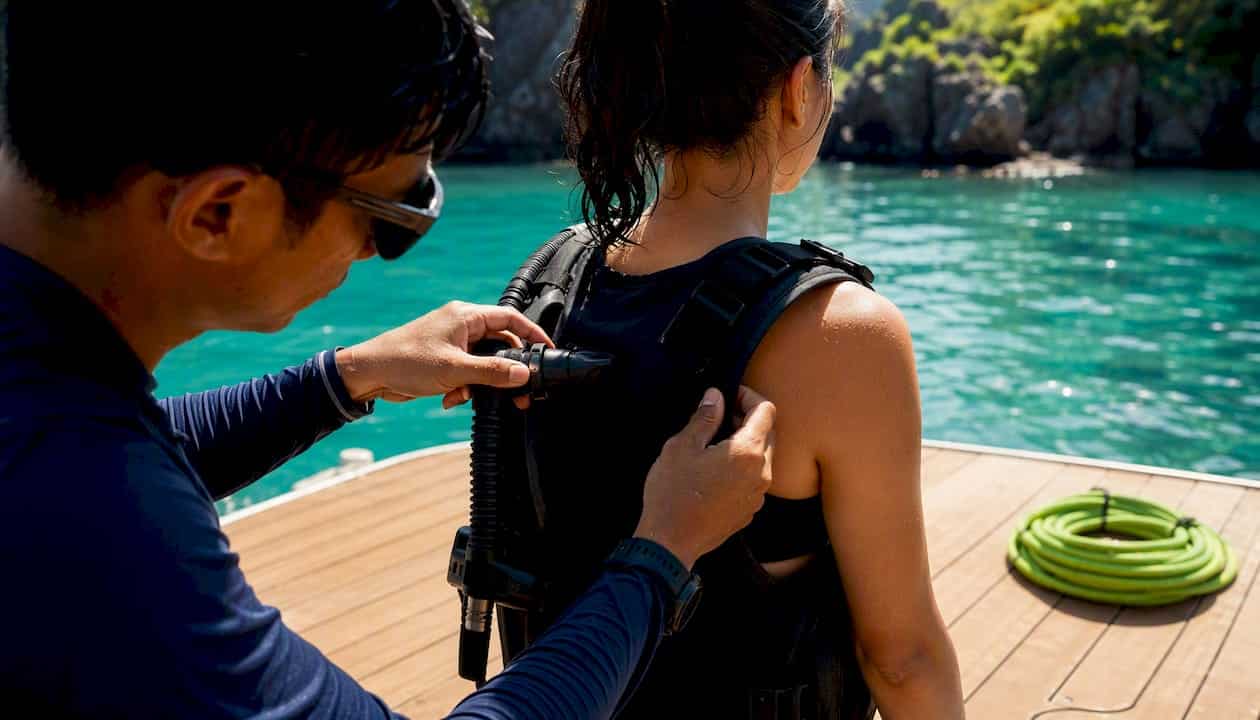
On a well-run snorkel trip, the crew doesn’t leave gear choice to guesswork. Guides typically supply and inspect vests before anyone enters the water, checking valves, straps, and visibility colour as a matter of routine rather than an afterthought. Guests are fitted properly before the first jump in, not handed a vest and left to sort it out mid-swim.
Weaker swimmers or first-time snorkellers are usually kept closer to a guide or the boat ladder, sometimes given a firmer inflation level to reduce effort. None of this replaces the basic rule that applies everywhere: the single biggest safety factor is wearing a properly fitted device the entire time you’re in the water, not just at the start of the swim.
A publisher’s honest take on the snorkel vest vs lifejacket debate
Most people overthink brand and colour and underthink fit. The comparison between snorkel vests and life jackets isn’t really a battle between two products, it’s a question of matching the device to what you’re actually doing in the water. For reef snorkelling with a guide nearby, a snorkel vest wins on comfort and control every time. For anything involving a boat, open crossings, or unsupervised swimming, a proper life jacket earns its bulk. Trust the operator’s fitting process over your own guesswork, and if something feels loose or restrictive before you jump in, say so. Getting fitted right takes two minutes and matters more than the device you’re wearing.
— Carl
Book a guided snorkel trip where the gear is sorted for you
If you’d rather skip the vest research entirely, some operators run guided snorkel and boat trips around Phuket’s islands where flotation gear is supplied, checked, and fitted by the crew before you get in the water, following Hawaii attraction safety tips for families and cultural explorers. That’s the real advantage over sourcing and testing your own kit: no guesswork on sizing, no wondering whether your inflatable holds air, and a guide watching over weaker swimmers throughout the swim.

Trips to spots like Racha and the Coral Islands include snorkelling stops with vests supplied as standard, alongside hotel pick-up and a crew who handle the safety side so you can focus on the reef. If you’re planning a Phuket trip and want snorkelling built into a boat day rather than sorted separately, check available dates and book your spot on Qbictravel’s island tour and cruise page.
Sources
- Why wear a lifejacket? | RNLI
- Life jacket wear guidance | National Park Service (NPS)
- Snorkel vest vs. life jacket: Which is right for you? | OutsiderView
- Life Jacket vs. Snorkeling Vest – Different Types of PFDs | DipnDive
- Why wear a lifejacket? | Australian Maritime Safety Authority


