

Role of checkpoints in guided ATV tours: Thailand guide
Checkpoints in guided ATV tours are designated stops where guides regroup riders, verify safety compliance, and manage pace throughout the adventure. Whether you are planning your first ATV ride in Phuket or you have ridden trails before, understanding the role of checkpoints in guided ATV tours changes how you experience every kilometre. These stops are not interruptions. They are the structure that keeps your group safe, legal, and having fun on Thailand’s lush, unpredictable terrain.
How do checkpoints improve safety on guided ATV tours?
Checkpoints are the backbone of safe group riding. A typical guided ATV tour follows a clear flow: arrival, safety briefing, gear distribution, and then guided riding with planned stops at scenic spots or regroup points. Each stop gives the guide a chance to assess the group before the next section begins.
The safety benefits of ATV tour checkpoints are specific and practical:
- Pace regulation. Guides use stops to slow down faster riders and allow beginners to catch up. Unsafe spacing between riders is one of the most common causes of off-road incidents.
- Equipment checks. Helmets loosen, goggles fog, and gloves slip. A checkpoint gives the guide two minutes to spot and fix these issues before they become problems on the trail.
- Rider condition monitoring. Heat and humidity in Thailand are serious factors. Guides watch for signs of fatigue or dehydration at every stop and can adjust the route if needed.
- Preventing separation. Guided tours reduce stress for beginners by shifting navigation responsibility to the guide. Checkpoints reinforce this by keeping every rider within a controlled zone.
- Incident response. If a rider drops their ATV or takes a wrong line, a checkpoint means the group is never more than a short stretch away from a controlled gathering point.
Off-road leadership principles back this up. Lead and sweep roles combined with planned regroup stops maintain group integrity across varied terrain. Without these stops, faster riders pull ahead, slower riders fall behind, and the group fractures. Once a group fractures, the guide loses the ability to manage anyone effectively.
Pro Tip: If you are a beginner, tell your guide before the tour starts. They will position you near the front of the group at checkpoints so you set the pace rather than chase it.
What happens at comfort breaks during a guided ATV adventure?
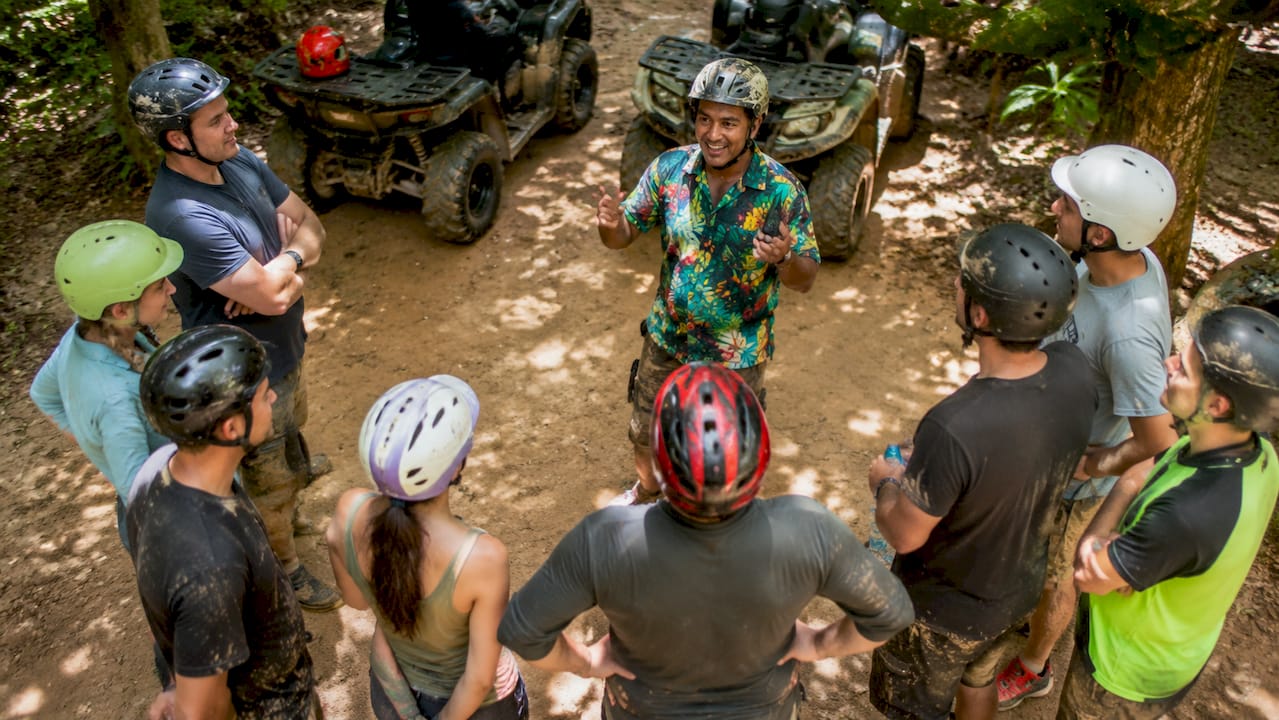
Checkpoints are not only about safety. They are also where the fun really happens. Planned rest stops give you the chance to hydrate, take photos, and soak in views that you would miss if you were focused on the trail ahead.
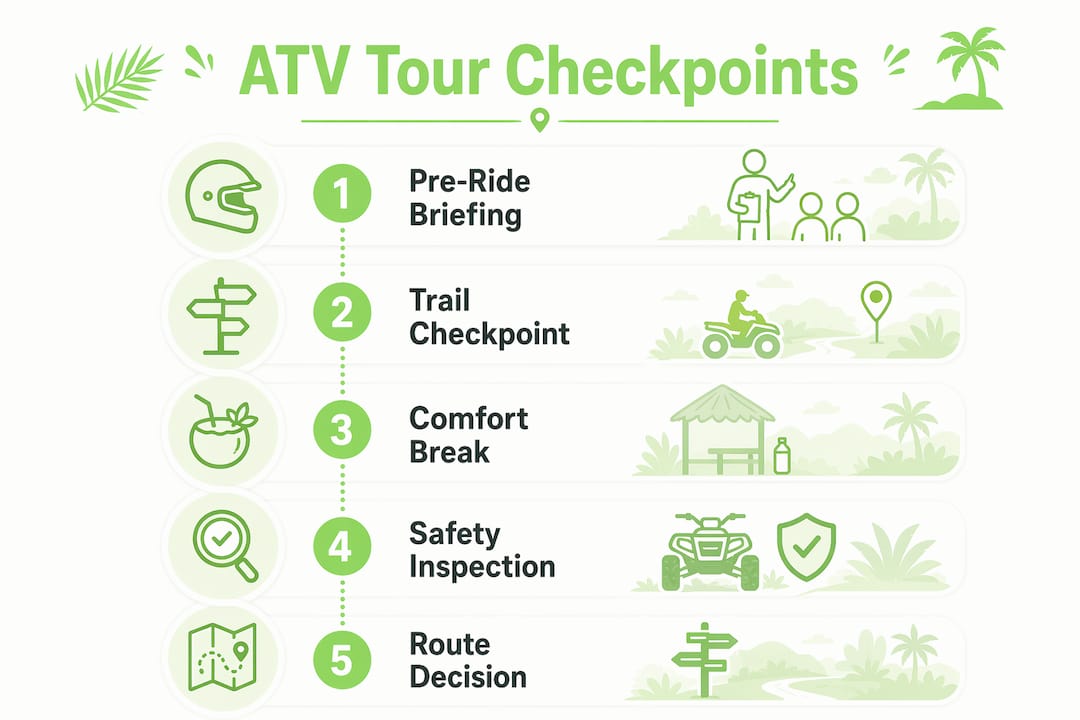
A typical structure for a beginner tour looks like this:
- Pre-ride briefing stop. Before you even start the engine, the guide walks you through controls, hand signals, and what to expect at each checkpoint. This sets the tone for the whole session.
- First trail checkpoint (approximately 30–40 minutes in). The group pauses at a scenic point. Guides distribute water, check helmets, and let riders catch their breath. This is usually where the best photos happen.
- Mid-tour activity stop. On longer routes, this stop might include a cultural element, a viewpoint, or an interaction with local surroundings. It breaks the physical effort and adds a memorable moment.
- Final regroup before return. The guide confirms everyone is ready for the last section, checks fuel levels on the ATVs, and reminds riders of the return trail conditions.
Beginner tours in Pattaya typically run for around three hours total, with approximately two hours of actual riding and the remainder split across supervised breaks. That structure is not accidental. It reflects how fatigue builds over a session and how strategic pauses keep riders alert and engaged.
The guide’s role at these stops is active, not passive. They are watching your body language, checking the ATVs, and planning the next segment based on how the group is performing. A good guide turns every checkpoint into a moment that adds to the experience rather than interrupting it.
What are the legal implications of checkpoints on ATV tours in Thailand?
Thailand’s road laws directly affect guided ATV tours, particularly on routes that cross or run alongside public roads. Riders and guides must be prepared for police checkpoints that enforce helmet and document requirements.
| Requirement | Detail |
|---|---|
| Helmet law | All riders and passengers must wear helmets at all times on public roads |
| Fine amount | 2,000 THB per person since june 2025 |
| Documents required | Valid driving licence appropriate for the vehicle class |
| Enforcement style | Immediate fines with no warnings issued |
| Impact on tours | Non-compliance causes delays and potential tour cancellation |
Thailand’s helmet enforcement at public road checkpoints is strict and consistent. Fines of 2,000 THB per person have been in effect since june 2025, and police issue them on the spot with no grace period. This is not a risk worth taking.
Professional tour operators build compliance into their checkpoint procedures from the start. Helmets are fitted and checked before the first metre of riding. Guides confirm that every rider carries valid identification and the appropriate licence class. Tours with structured compliance checks avoid delays and keep the group moving on schedule.
The practical effect is significant. A single non-compliant rider can hold up the entire group at a police checkpoint, disrupting timing and reducing the overall experience for everyone. Reputable operators treat legal compliance as part of the tour structure, not an afterthought.
Pro Tip: Bring your original driving licence, not a photocopy. Thai police checkpoints require the original document, and a photocopy will not satisfy the requirement.
How do guides use checkpoints for communication and route decisions?
Checkpoints are planned communication nodes. They are the moments when the guide can speak to every rider, assess conditions, and make decisions that affect the rest of the tour.
The communication functions of a well-run checkpoint include:
- Route updates. Trail conditions change quickly in Thailand, especially after rain. A checkpoint gives the guide a chance to reroute before the group hits a flooded section or unstable ground.
- Group briefings. The guide can explain what is coming next, including technical sections, steep descents, or road crossings, so riders are mentally prepared.
- Rider feedback. Stops give riders the chance to flag concerns privately. Someone who is struggling will rarely shout it across a moving trail but will mention it quietly at a rest point.
- Sweep confirmation. The sweep rider, who travels at the back of the group, reports to the guide at each checkpoint. This confirms that no one has been left behind or taken a wrong turn.
- Decision-making under pressure. If weather changes or a rider has a mechanical issue, the checkpoint is where the guide makes the call to continue, adjust, or turn back.
Regroup points prevent separation cascades caused by terrain or distractions. Without them, a moment of hesitation on a tricky section can leave a rider isolated and unsure of the route. The guide cannot be everywhere at once. Checkpoints are the system that makes group management possible across a spread-out trail.
Many riders underestimate the importance of these stops until they experience a tour without them. Unplanned group fragmentation leads to unsafe behaviours like speeding to close gaps or taking unfamiliar shortcuts. Structured checkpoints remove that pressure entirely.
Understanding off-road adventure tourism more broadly shows that this checkpoint model is standard practice across reputable operators worldwide, not unique to any single destination.
Key takeaways
Checkpoints in guided ATV tours are the primary mechanism for maintaining safety, legal compliance, and group cohesion across every stage of the ride.
| Point | Details |
|---|---|
| Safety and pace control | Guides use stops to regulate spacing, check equipment, and monitor rider condition throughout the tour. |
| Comfort and engagement | Planned breaks for water and photos reduce fatigue and keep riders enthusiastic across a full session. |
| Legal compliance in Thailand | Helmet and licence checks at tour checkpoints prevent 2,000 THB fines at police stops since june 2025. |
| Communication and route decisions | Guides use regroup points to update routes, brief riders, and confirm no one has been separated. |
| Group cohesion | Lead and sweep roles supported by checkpoints prevent fragmentation and unsafe gap-chasing behaviour. |
Why checkpoints changed how I think about guided riding
I used to think checkpoints were the boring part of a guided ATV tour. You stop, you drink some water, you wait for the slower riders. I was wrong about that, and it took a few years of watching groups ride before I understood why.
The riders who enjoy guided ATV tours the most are almost always the ones who arrive relaxed and leave energised. That does not happen by accident. It happens because a well-structured tour removes the anxiety of not knowing what comes next. Checkpoints are how that structure is delivered in real time, on the trail, with a group of people who all have different skill levels and different thresholds for risk.
What I have observed is that beginners almost always underestimate how much they will appreciate a rest stop until they reach one. The combination of heat, vibration, and concentration is more tiring than most people expect. A guide who reads that and calls an early stop is not slowing the tour down. They are saving the second half of it.
The compliance piece matters more than riders realise too. Arriving at a police checkpoint without the right documents or a properly fitted helmet is not just a fine. It is a disruption that affects every person in the group. Operators who build compliance into their checkpoint routine are doing everyone a favour, including the riders who would never have thought to check.
My honest advice: trust the stops. They are not filler. They are the reason the tour works.
— Carl
Qbictravel’s guided ATV tours in Phuket
Qbictravel builds checkpoint systems into every guided ATV tour in Phuket, covering safety briefings, helmet compliance, regroup stops, and scenic breaks across Phuket’s trails.

With a 4.5 rating from 237 reviews and 99% issue-free services verified by Trustindex, Qbictravel’s guides manage pace, compliance, and group communication at every stop. You ride through lush jungle scenery knowing that every checkpoint has been planned to keep you safe and the experience epic. Ready to ride? Check out the full range of Phuket ATV adventures and book your spot today.
FAQ
What is the role of checkpoints in guided ATV tours?
Checkpoints are planned stops where guides regroup riders, check safety equipment, manage pace, and make route decisions. They are the primary tool for keeping a group safe and cohesive across varied terrain.
Are helmets required at ATV tour checkpoints in Thailand?
Yes. Thailand enforces helmet laws at public road checkpoints with fines of 2,000 THB per person since june 2025. Reputable tour operators check helmet fit before riding begins and at every stop.
How many checkpoints does a typical guided ATV tour include?
A standard three-hour beginner tour typically includes a pre-ride briefing stop, one or two trail checkpoints, and a final regroup before the return. The exact number depends on route length and terrain.
Can checkpoints help beginner riders on ATV tours?
Checkpoints reduce anxiety for beginners by shifting navigation responsibility to the guide and providing regular pauses to rest, hydrate, and receive instruction before the next trail section.
What documents should I bring to an ATV tour in Thailand?
Bring your original driving licence. Thai police checkpoints require the original document, and photocopies are not accepted. Your tour operator will confirm the specific licence class required for the vehicle you are riding.


