

How to choose unique Thailand experiences for your trip
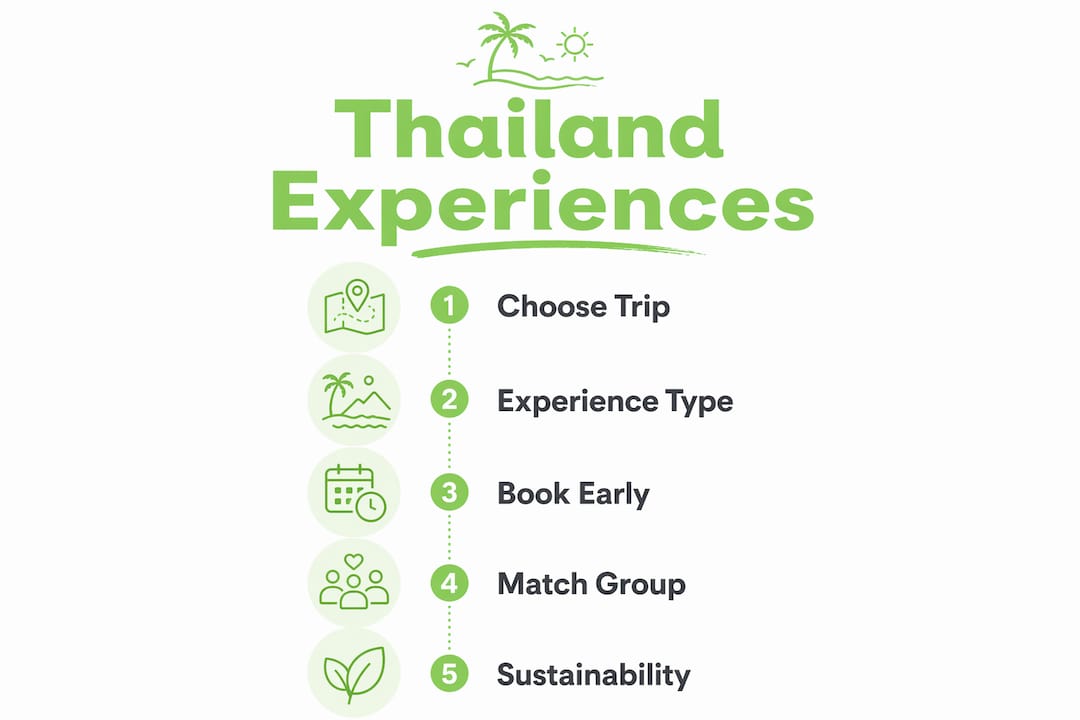
The best Thailand experiences to book fall into five clear categories: family-run cultural stays and fisherman trips, hands-on food and craft workshops, island and small-boat journeys, off-the-beaten-track northern farmstays, and adrenaline adventures like rock climbing, ziplines, and jet ski tours. Match your category to your traveller profile first — families lean towards cultural and island options, adrenaline seekers towards adventure, slow travellers towards farmstays and workshops. Book small-group farmstays and cooking classes at least four to six weeks ahead; adventure slots in Phuket are often available with much shorter notice, sometimes same-day.
Qbictravel holds a 4.5-star rating from 237 reviews with a 99% issue-free service rate, making it a strong starting point for curated Phuket adventures. That kind of track record matters when you are choosing between dozens of operators online.
Table of Contents
-
What safety and etiquette rules do UK travellers need to know?
-
How do you find authentic, family-run experiences in Thailand?
-
When should you book, and how do you build a short itinerary?
-
Qbictravel’s curated Phuket experiences are worth booking early
What are the best unique Thailand experiences to book?
Thailand’s most memorable experiences rarely appear on the first page of a generic travel search. The real gems sit in a different tier: a fishing family on Koh Samui who takes you out on their longtail at dawn, a Karen hill tribe community in Chiang Mai where you roast your own coffee over an open fire, or a jet ski tour that skips the crowded beaches and heads straight for hidden coves around Phuket’s outer islands.
Here is a themed catalogue of the experiences worth shortlisting, with practical details for each.
Cultural and family-run experiences
Fisherman Heritage Experience, Koh Samui. This five-hour trip is run by a local fishing family and combines longtail fishing, mangrove kayaking, and a fresh seafood lunch on the pier. Join-in pricing starts from ฿2,900 per adult, with a private group option at ฿14,000. Hotel pickup and drop-off are included. It suits families with children aged six and above, couples, and anyone who wants genuine daily-life access rather than a staged show. Half-day commitment, low physical demand, and the sustainability signal is strong: the family continues their actual livelihood during your visit.

Chai Lai Orchid farmstay, near Doi Inthanon, Chiang Mai. This community-based farmstay is hosted by Karen communities and includes bamboo cooking, jungle hikes, and bathing with rescued elephants at an ethical sanctuary. It runs across multiple days, which is what makes it genuinely immersive. Suited to couples and families with older children; rustic bungalow accommodation is part of the experience. Budget roughly £60–£120 per person per night as a guide, though pricing varies by package.
Hands-on craft and food workshops
Thai Akha Kitchen cooking class, Chiang Mai. Each student gets their own wok and stone mortar — no sharing, no spectating. The morning class with market tour costs 1,400 THB (roughly £30); the evening class runs at 1,300 THB. You leave with a cookbook and eleven dishes you actually cooked yourself. This is the format to look for: individual stations separate a real skill-building class from a mass-market demonstration.
Karen hill tribe coffee tour, Chiang Mai mountains. Run by a small family operation in the highlands, this full-day farm-to-cup experience covers shade-grown cultivation, traditional fire-roasting, and a shared meal prepared from food grown on the property. No staged performances — you work alongside the community. Suitable for couples, solo travellers, and small groups; moderate walking on forest trails required. Budget a full day and wear sturdy shoes.
Island and small-boat journeys
Longtail boat trips to less-visited islands around Phuket, Krabi, and Koh Samui offer a very different experience from the big speedboat group tours. Smaller vessels reach shallower bays, quieter beaches, and spots the large catamarans skip entirely. Snorkelling by longtail around Coral Island or heading out to Raya Island on a private boat are both genuinely unhurried ways to see the coast. Phuket island tours in this format typically run four to eight hours and suit all ages, including young children, provided sea conditions are calm.

Adventure experiences
Rock climbing at Railay, Krabi. Railay’s limestone karst towers are among the most dramatic climbing settings in Southeast Asia. Beginner half-day sessions are widely available; no prior experience needed. Best for couples and solo travellers aged 12 and above.
Flight of the Gibbon zipline and Pai jungle trekking, northern Thailand. Multi-platform ziplines through the forest canopy near Chiang Mai deliver a full adrenaline hit with a conservation angle — the operator supports gibbon rehabilitation. Pai jungle treks suit those who want a slower pace through lush terrain. Both are best booked as full-day experiences.
White-water rafting, Chiang Mai. The Mae Taeng River runs fast enough to be genuinely exciting without requiring prior experience. Best from July to November when water levels are high. Minimum age is typically ten; non-swimmers should check with operators before booking.
ATV and zipline adventures, Phuket. For thrill-seekers based in Phuket, ATV tours through jungle trails and sea-view tracks deliver off-road excitement without a long transfer. Qbictravel’s zipline and ATV combination is a popular half-day option that pairs both activities back to back.
Urban one-offs
Mahanakhon Bangkok I-Tilt. On the 75th floor of King Power Mahanakhon, this experience lets you tilt out over Bangkok’s skyline on a glass-floored ledge. The ride costs ฿450 per person and requires a Mahanakhon SkyWalk admission beforehand. Pure urban thrill, no physical fitness required, and it takes about thirty minutes.
Wildlife-conscious options
Ethical elephant encounters are available at sanctuaries near Chiang Mai and in Phuket. The key distinction: rescued elephants living in a natural setting, no riding, no circus tricks. Qbictravel’s elephant sanctuary in Phuket follows a no-riding, observation-and-bathing model. Always check that the sanctuary is genuinely rescue-focused before booking.
Pro Tip: When comparing wildlife experiences, ask one direct question: “Do the elephants perform or carry riders?” If the answer is yes to either, walk away. Genuine sanctuaries are straightforward about their no-performance policy.
| Experience type | Best for | Typical duration | Price band (GBP guide) | Accessibility | Sustainability signal |
|---|---|---|---|---|---|
| Fisherman Heritage, Koh Samui | Families, couples | 5 hours | from ฿2,900 per adult join-in, ฿14,000 private group | Low physical demand, age 6+ | Family livelihood, no staged elements |
| Farmstay, Doi Inthanon | Couples, older families | Multi-day | £60–£120 per person per night | Moderate, rustic conditions | Community-led, conservation-minded |
| Cooking class, Chiang Mai | All travellers | Half-day | — | None required | Small group, individual stations |
| Hill tribe coffee tour | Couples, solo, small groups | Full day | £40–£60 | Moderate forest walking | Genuine daily livelihood, no staging |
| Rock climbing, Railay | Couples, solo, age 12+ | Half-day | £30 | Moderate fitness | Low-impact, small group |
| ATV/zipline, Phuket | Thrill-seekers, age typically 12 and above | Half-day | — | Moderate fitness | Operator safety-certified |
| Mahanakhon I-Tilt, Bangkok | All ages | 30 minutes | — | No fitness required | Urban attraction |
| Ethical elephant sanctuary | Families, all ages | Half-day | — | Low physical demand | Rescue-focused, no riding |
GBP price bands are illustrative guides based on published THB pricing converted at approximate rates; confirm current pricing directly with operators.
How do you pick the right experience for your trip?
Start with three questions: How long is your trip? What is your group’s energy level? And what matters most — culture, family fun, adrenaline, or genuine relaxation?
A long weekend in Phuket points naturally towards island and adventure options. A week or more opens up northern Thailand, where farmstays and workshops need the travel time to justify the journey. Families with young children should prioritise experiences with clear age minimums and bathroom facilities on-site. Solo travellers and couples have the most flexibility and can lean into the more rustic or physically demanding options.
Practical questions to ask yourself before booking:
-
How many people are in your group, and do any have mobility limitations?
-
Are there children under ten? Check age minimums for every activity.
-
How comfortable is your group with rustic conditions (outdoor loos, basic bungalows, bumpy 4×4 roads)?
-
Do you want a private experience or are you happy joining a small group?
-
What is your cancellation flexibility? Some small operators have strict no-refund policies.
Red flags to avoid:
-
Vague inclusions: if the booking page does not list what is and is not included, ask before paying.
-
Wildlife feeding or riding: both signal mass-market priorities over animal welfare.
-
No safety equipment visible in photos or no mention of guide-to-guest ratios for adventure activities.
-
Operators who cannot answer basic questions about insurance or medical limitations.
Family checklist — quick reference:
-
Confirm the minimum age for every activity in writing.
-
Ask whether child-sized safety equipment (helmets, life jackets) is available on-site.
-
Check that food options accommodate allergies or fussy eaters.
-
Verify toilet and rest facilities, especially for full-day trips.
-
Look for family adventure guidance from operators who specialise in family groups.
For a broader overview of what adventure formats are available in Phuket specifically, the types of adventure tours guide covers the full range from gentle cultural outings to high-adrenaline options.
What safety and etiquette rules do UK travellers need to know?
The single most important safety step before you travel is checking the UK government’s foreign travel advice for Thailand. It is updated regularly and covers regional cautions, entry requirements, and health advisories. The US State Department’s Thailand travel advisory also flags specific border regions with higher risk levels — worth reading even as a UK traveller for the regional detail.
Temple and cultural etiquette:
-
Cover shoulders and knees before entering any temple; many provide sarongs at the entrance for a small fee.
-
Remove shoes before stepping inside temple buildings.
-
Do not touch monks or hand objects directly to them; place items on a nearby surface instead.
-
Ask before photographing locals, especially in rural communities and hill tribe villages.
-
Pointing feet at Buddha images or people is considered disrespectful — sit cross-legged or with feet tucked behind you.
Adventure activity safety checks:
-
Ask to see safety equipment before you commit: helmets, life jackets, and harnesses should be in good condition with no visible damage.
-
Check the guide-to-guest ratio. For water activities, one guide per four to six guests is a reasonable standard.
-
Confirm whether the operator carries liability insurance and what the medical emergency procedure is.
-
Disclose any medical conditions (heart conditions, pregnancy, back injuries) before booking adventure activities — reputable operators will ask.
-
For jet ski tours, check that the briefing covers local water rules and that the equipment is serviced regularly.
Wildlife and animal welfare:
-
Avoid any attraction involving elephant riding, performing animals, or wildlife selfies with drugged animals.
-
Do not feed wild monkeys — it encourages aggressive behaviour and disrupts natural feeding patterns.
-
Coral reef snorkelling: do not touch or stand on coral; use reef-safe sunscreen.
How do you find authentic, family-run experiences in Thailand?
Prioritise small, family-run operators and community-based tourism offerings. The economic case is simple: your money goes directly to the household rather than a commercial intermediary, and the experience you get is rooted in real daily life rather than a performance designed for tourists.
The Fisherman Heritage Experience on Koh Samui is a good benchmark. The family continues their actual fishing work during your visit. You are joining their morning, not watching a recreation of it. Hosts eat with guests, activities represent genuine daily livelihood, and there is an explicit no-staged-wildlife-feeding policy. That combination is what separates a real family-run experience from a polished imitation.
Authenticity checklist — ask these before booking:
-
Who directly benefits financially from this experience?
-
Are the activities part of the host’s actual daily livelihood, or were they created specifically for tourists?
-
Are animals observed in natural behaviour, or are they fed, handled, or performing?
-
Is the group size capped (ideally under twelve people)?
-
Does the operator have a named local host or family, not just a generic “local guide”?
Questions to ask operators directly:
-
“How long has your family been running this experience?”
-
“What happens if we want to slow down or skip an activity?”
-
“Do you work with any conservation or community organisations?”
Sustainable choices sometimes cost more. The Fisherman Heritage Experience starts from ฿2,900 per adult for join-in, or ฿14,000 for a private group, which is more than a mass-market boat tour, but the cultural return is incomparably richer. The Chai Lai Orchid farmstay near Doi Inthanon is another example: multi-day stays with Karen hosts cost more per night than a Chiang Mai guesthouse, but the access to generational traditions — bamboo cooking, jungle hikes, ethical elephant bathing — is simply not available at a lower price point.
Pro Tip: For hands-on workshops like cooking or coffee roasting, always confirm individual stations before booking. A class where twelve people share two woks teaches you very little. Thai Akha Kitchen’s individual-station model and the Karen hill tribe coffee tour’s farm-to-cup format are both worth using as the benchmark.
When should you book, and how do you build a short itinerary?
Booking windows by experience type:
-
Small-group farmstays (Chai Lai Orchid, hill tribe coffee tours): book four to eight weeks ahead, especially November to February when northern Thailand is at its most popular.
-
Cooking classes with individual stations: two to four weeks ahead for peak season; sometimes available with a week’s notice in low season.
-
Adventure activities in Phuket (jet ski, ATV, zipline): often bookable with 24–48 hours’ notice; Qbictravel accepts last-minute bookings and flexible pickups.
-
Ethical elephant sanctuaries: book at least two weeks ahead; group sizes are capped.
Sample mini-itinerary 1: Long weekend in Phuket (3 days)
-
Day 1 afternoon: Arrive, settle in. Book a sunset longtail trip or a short snorkel excursion to Coral Island.
-
Day 2 full day: 8-island jet ski tour covering Phuket’s outer islands — roughly four hours on the water, hotel pickup included.
-
Day 3 morning: ATV jungle trail or zipline combination before your afternoon flight. Half-day, no long transfer needed.
Estimated cost: £150–£250 per person for activities, excluding accommodation and flights.
Sample mini-itinerary 2: Five to seven days, Phuket and Chiang Mai
-
Days 1–3: Phuket. Island boat tour, jet ski or ATV adventure, one cultural city tour.
-
Day 4: Fly north to Chiang Mai (one hour, budget airlines from £20–£40 one way).
-
Day 5: Full-day Karen hill tribe coffee tour in the mountains.
-
Day 6: Thai Akha Kitchen morning cooking class, afternoon free in the old city.
-
Day 7: Optional Chai Lai Orchid farmstay overnight, or return flight.
Estimated activity spend: £200–£350 per person across the week.
Sample mini-itinerary 3: Family-friendly two days, Koh Samui
-
Day 1: Fisherman Heritage Experience (5 hours, hotel pickup, seafood lunch included). Afternoon beach time.
-
Day 2: Ethical elephant sanctuary visit (half-day), afternoon snorkel trip by longtail.
Estimated activity spend: £100–£160 per adult, less for children.
A few practical notes:
-
Phuket to Chiang Mai requires a flight; overland is possible but takes 12+ hours.
-
Do not pack more than two major activities per day. Heat and travel fatigue are real, especially with children.
-
Rainy season in the south (May to October) can affect boat trips; the north is drier in this period, making it a good time to flip the itinerary and start in Chiang Mai.
Key takeaways
The fastest route to a genuinely memorable Thailand trip is matching your experience category to your group profile, then booking the small-group and family-run options early.
| Point | Details |
|---|---|
| Match category to profile | Families suit cultural and island trips; adrenaline seekers suit adventure; slow travellers suit farmstays and workshops. |
| Book small-group options early | Farmstays and cooking classes with individual stations fill up four to eight weeks ahead in peak season. |
| Check authenticity signals | Look for named local hosts, capped group sizes, and activities tied to real daily livelihoods. |
| Verify safety before adventure | Confirm equipment condition, guide ratios, and insurance before any water or off-road activity. |
| Qbictravel for Phuket adventures | Qbictravel’s jet ski, ATV, and island tours offer flexible, last-minute booking with hotel pickup and a 4.5-star rating from 237 reviews. |
Why the “authentic experience” label deserves more scrutiny
There is a version of “authentic Thailand” that has been packaged, priced, and sold so many times it has lost any connection to the real thing. The elephant camp that claims to be a sanctuary but still offers riding. The cooking class where twenty people watch one chef. The “hill tribe village” that exists solely for tourist visits.
The experiences worth choosing share one quality: the host’s life continues whether you are there or not. The Koh Samui fisherman goes out at dawn because that is how his family eats, not because a tour company scheduled it. The Karen farmers roast coffee because it is their crop, not because a travel brochure called it “authentic.” When you find that kind of experience, the difference is immediately obvious.
What this means practically: be willing to pay a little more for a smaller group, a named local host, and a clear explanation of where your money goes. The Fisherman Heritage Experience at ฿14,000 for a private group is not cheap, but it is a morning you will remember for years. A ฿500 mass-market boat tour is forgettable before you have even dried off.
The other thing worth saying: not every experience needs to be a deep cultural immersion. A jet ski tour around Phuket’s islands is not a cultural experience — it offers pure fun, and that is a completely legitimate reason to book it. The mistake is paying cultural-experience prices for something that is actually a performance, or paying adventure prices for something that is actually just a queue.
Qbictravel’s curated Phuket experiences are worth booking early
If you are heading to Phuket and want adventure and island experiences that actually deliver, Qbictravel is the local operator to know. Rather than generic group tours, Qbictravel focuses on niche, well-organised activities: jet ski tours covering up to eight islands, ATV adventures through jungle and sea-view trails, private longtail and speedboat island cruises, and cultural city tours with hotel pickup included.

The trust signals are clear: a 4.5-star rating from 237 verified reviews, a 99% issue-free service rate confirmed via Trustindex, and transparent inclusions on every booking page. Flexible pickup times and last-minute availability mean you do not need to lock in every detail weeks ahead. Family packages are available, and the team is reachable via WhatsApp for quick questions before you commit.
Browse the full range of Phuket tours and experiences on the Qbictravel site, or go straight to the jet ski or ATV category pages to check availability for your dates.
Useful sources and links to check before you book
-
UK Foreign Travel Advice for Thailand — The FCDO’s live advisory page for UK travellers. Check this before booking and again within 72 hours of departure for the latest entry requirements, regional cautions, and health guidance.
-
US State Department Thailand Travel Advisory — Useful for detailed regional risk information, including border areas. Relevant for travellers planning trips to northern or eastern Thailand.
-
Fisherman Heritage Experience, Koh Samui — Full details on the family-run fisherman trip including pricing, duration, and what is included.
-
Chai Lai Orchid farmstay, Doi Inthanon — Community-based farmstay near Chiang Mai with Karen hosts and ethical elephant sanctuary access.
-
Thai Akha Kitchen, Chiang Mai — Individual-station cooking classes with market tour; pricing and class schedule listed on site.
-
Karen Hill Tribe Coffee Tour, Chiang Mai — Full-day farm-to-cup experience with a small family operation in the Chiang Mai highlands.
-
Mahanakhon Bangkok I-Tilt — Ticket pricing and access details for the Bangkok skyscraper tilt experience.
-
Qbictravel, Phuket — Full tour listings for jet ski, ATV, island cruises, and cultural options in Phuket; book online or via WhatsApp.
This article is general travel information, not professional legal or safety advice. Always confirm current entry requirements, regional advisories, and operator credentials directly with the relevant authorities and providers before travelling.


